In my book, I speak of a character: Wilson, who buys a custom-built laptop from an online store. He visits the website and finds a user-friendly interface with detailed product descriptions and customer reviews. He interacts with a live chat assistant who helps him customize his laptop based on his specific needs. As Wilson checks out, the site offers him a discount code for first-time buyers and suggests accessories that align with his laptop choice. A few days after purchase, he receives a personalized email with setup tips for his new laptop and links to online tutorials. The packaging includes a card from the company’s CEO thanking him for supporting their business. Later, Wilson is invited to participate in a satisfaction survey with the opportunity to earn store credits for future purchases. Wilson’s entire experience was personalized with emotional connection at different touchpoints at great value. That is customer experience, when it is intentionally designed.
Customer experience is the sum of every interaction a customer has with a brand that shapes their perception and emotions at each touchpoint along their journey and creates lasting impressions.
Customer Journey Maps
A customer journey map provides a clear visualization of the entire customer experience across all stages. It allows you to see your company from the outside in. Instead of focusing on internal operations, you’re looking at the results of those operations from the customer’s viewpoint. This dynamic map outlines how customers move through interactions by capturing their actions, thoughts, and emotions at each touch point. Mapping the journey uncovers insights, identifies pain points, and optimizes the experience. It reveals critical decisions, departments involved, IT systems, and any other points that are specific to your company. The map also highlights that customer journeys are rarely linear but dynamic and often involve a cyclical, multi-channel flow that reflects the complexity of the modern customer behavior. Reviewing and refining the map with sales, customer service, other teams and departments ensures alignment, reduces obstacles throughout the customer lifecycle. It also fosters a shared commitment to delivering a seamless experience. It’s only when all parts of your organization operate seamlessly together that you can deliver the experience your customers expect and demand.
To summarize it all: Customer journey mapping drives customer experience by making the invisible visible, uncovering friction that erodes retention, highlighting emotional moments that build loyalty, and aligning teams around what truly matters to the customer. When organizations connect operational metrics to real customer outcomes, they strengthen trust, increase lifetime value, and move from reactive service to intentional experience design.
Yet in many organizations, journey maps are created once, presented in a workshop, and then quietly forgotten. They become documents rather than disciplines. Teams return to siloed thinking, operational metrics regain priority over customer outcomes, and friction slowly reappears. The question is not whether you have mapped the journey but whether you are actively managing it.
Customer Journey Stages
For the sake of this article, I will focus on a generic map that is less complicated but allows you to follow and apply in your own organization.
Stage 1: Awareness
Think of the customer journey map as a budding friendship. In every brand’s relationship with its customers, there is a dynamic multi-stage process that ultimately determines whether a customer becomes a one-time buyer or a lifelong advocate. The multi-stage process starts with Awareness through an introduction. At this stage the customer realizes they have a problem and does not understand precisely what solution they need. They are not looking to make a purchase but are gathering information, assessing options, and trying to understand their pain points. At this stage, the brand educates, not persuades. They help customers make sense of their needs and build a foundation of trust by offering value without expecting an immediate return. Guiding questions include the following:
- How do customers first discover us and what perception is formed in that first moment?
- Is our message clear about the problem we solve?
- What emotions are triggered at first contact: curiosity, confusion, trust, skepticism?
Stage 2: Consideration
Going back to our relationship or friendship analogy, the relationship deepens through Consideration as people get to know each other. At this stage, customers have a solid grasp of their problem and want to explore solutions. They compare products and services, weigh the pros and cons, and narrow their options. The brand’s objective here is to help customers evaluate options. It can offer comparison guides and charts with in-depth comparisons between products and industry alternatives. Examples of guiding questions:
- What concerns or objections might customers have at this stage?
- How easy is it for them to find the information they need?
- Where might friction cause them to disengage?
Stage 3: Decision
A relationship or friendship is solidified by a Decision built on trust. When customers reach this stage, they have identified their preferred solution and are ready to buy. The brand’s task is to facilitate a seamless purchase process by removing any potential barriers to conversion and encourage commitment. Effective Decision includes free demos or consultations to let customers experience a product firsthand. These come along with clear pricing and product sign-up pages that make navigating purchasing decisions straightforward. Guiding questions may include:
- What makes the decision feel safe and confident?
- What risks are customers weighing at this moment?
- How simple is it to say “yes”?
Stage 4: Retention
Going back to our friendship example, the relationship requires ongoing effort to maintain and retain. This stage of the customer journey map is all about nurturing and supporting your customer base. This stage turns one-time customers into repeat buyers. Retention is where brands focus on delivering excellent onboarding experience and accessible ongoing customer service. Gathering customer feedback and acting on it helps continually refine retention and customer needs. Effective retention strategies can include providing a dedicated customer success manager for personalized support, and accessible customer service team to deliver quick and knowledgeable assistance. The questions to guide this stage include:
- Where does frustration begin to surface?
- How are we proactively checking in before problems escalate?
Stage 5: Loyalty
This phase turns customers into brand advocates and is the pinnacle of customer experience. At this point, customers are not only satisfied with a product or service but are also enthusiastic advocates who actively promote the brand. This is about exceeding customer expectations all around by offering seamless and consistent experiences through all channels and touch points across the organization. Customer relationships and experience are owned by everyone in the organization. Structured referral and loyalty programs are invaluable tools in this stage. Guiding questions may include:
- What makes the decision feel safe and confident?
- What risks are customers weighing at this moment?
Why Journey Mapping Matters for Employees
Effective customer journey mapping takes into consideration employees and employee experience. It’s fundamental to note that customer journey mapping is not only about improving external experience, but it also exposes what employees are navigating internally every day. When processes are unclear, systems are disconnected, or roles lack alignment, that internal friction inevitably shows up in customer experience. Mapping the employee journey alongside the customer journey creates clarity, reduces rework and firefighting, and empowers teams to see how their work directly contributes to customer outcomes. When employees understand the “why” behind the journey, engagement increases and the experience becomes intentional rather than accidental. Simply put, a broken employee journey creates a broken customer journey. Consider some of these questions:
- Are teams equipped to answer questions consistently?
- Are handoffs between departments seamless or fragmented?
Where AI Fits In
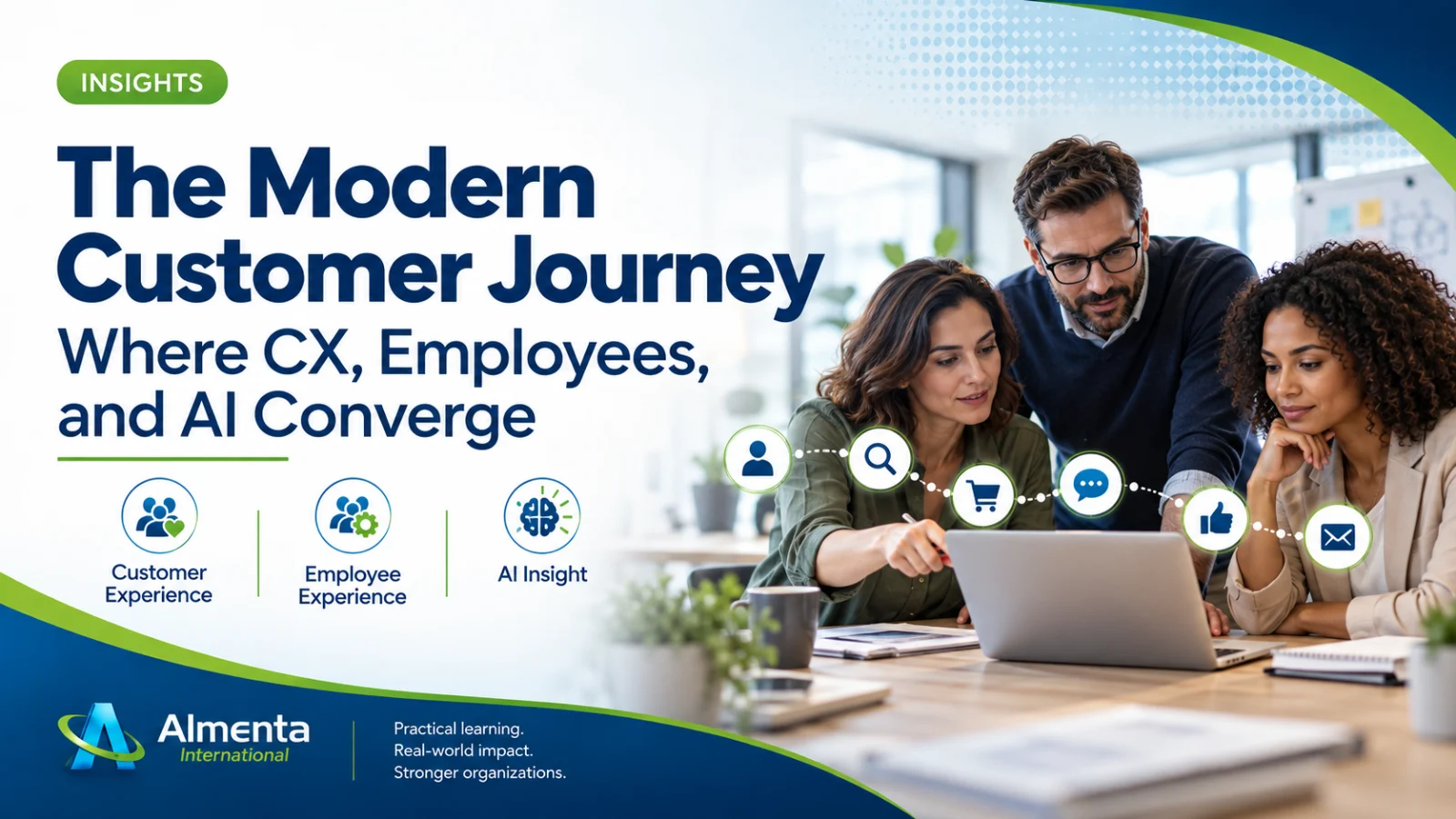
Artificial intelligence is transforming customer journey mapping from a static exercise into a dynamic, data-informed discipline. Instead of relying solely on assumptions or periodic feedback, AI enables organizations to analyze real-time behavioral data, detect sentiments across touchpoints, identify friction patterns, and predict potential drop-offs before they occur. This allows journey maps to evolve from visual representations of what we think is happening to living models grounded in evidence. When used strategically, AI deepens insight, sharpens decision-making, and helps organizations move from reactive problem-solving to proactive experience design while still requiring human judgment to interpret, prioritize, and act with empathy.
If your organization is mapping the journey but still struggling with retention, engagement, or inconsistent service, the gap may not be effort; it may be design. The Customer Centricity Circle offers a space to explore journey mapping as a strategic discipline and the connection between employee experience, AI-driven insight, and practical results.
Conclusion
The way we used to do customer mapping has changed tremendously. As much as we focus on the external customers and are intentional about designing excellent customer experiences, employee and employee experience cannot be forgotten. The power of AI cannot be underestimated; and yet it should be taken into account that not all AI is beneficial for customer experience. I will leave you with the following thought provoking and reflection questions:
- Where do our customers experience unnecessary friction?
- Do our employees experience clarity or confusion?
- Are we designing journeys intentionally or reacting to complaints?
- How are we leveraging data and AI to anticipate needs?
For more information contact: info@almentainternational.net or visit www.almentainternational.com