Organizations today are carrying an extraordinary amount of weight. Leaders are being asked to grow revenue while controlling costs, adopt new technologies while supporting anxious employees, strengthen culture while navigating workforce shifts, and deliver exceptional customer experiences while customers themselves are becoming more selective, skeptical, and demanding.
Employees are carrying pressures of their own. According to Gallup’s State of the Global Workplace research, global employee engagement has fallen sharply, with low engagement costing the global economy an estimated $10 trillion in lost productivity annually. In many workplaces, employees are learning new technologies, adjusting to evolving work expectations, managing heavier workloads, and trying to sustain energy in environments where change rarely slows down.
Customers, too, are navigating their own pressures. Economic uncertainty, information overload, declining trust, abundant choice, and rising expectations shaped by digital convenience are reshaping how people buy, engage, and define value. PwC research found that more than half of consumers stopped buying from a brand after a negative experience, reinforcing how quickly trust and loyalty can erode.
There is also a growing trust gap organizations cannot ignore. In one well-known PwC study, 87% of executives believed consumers highly trusted their companies, while only 30% of consumers agreed.
And somehow, organizations are expected to bring all of this together into coherent strategy, effective leadership, aligned teams, and consistent performance.
All these matter. But perhaps there is a deeper question organizations should be asking: effective for whom?
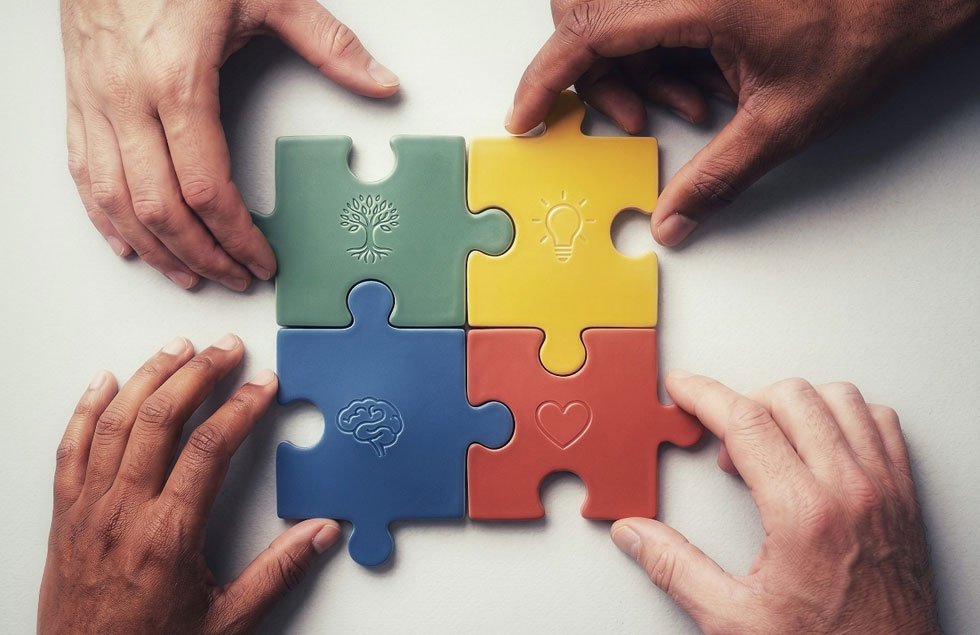
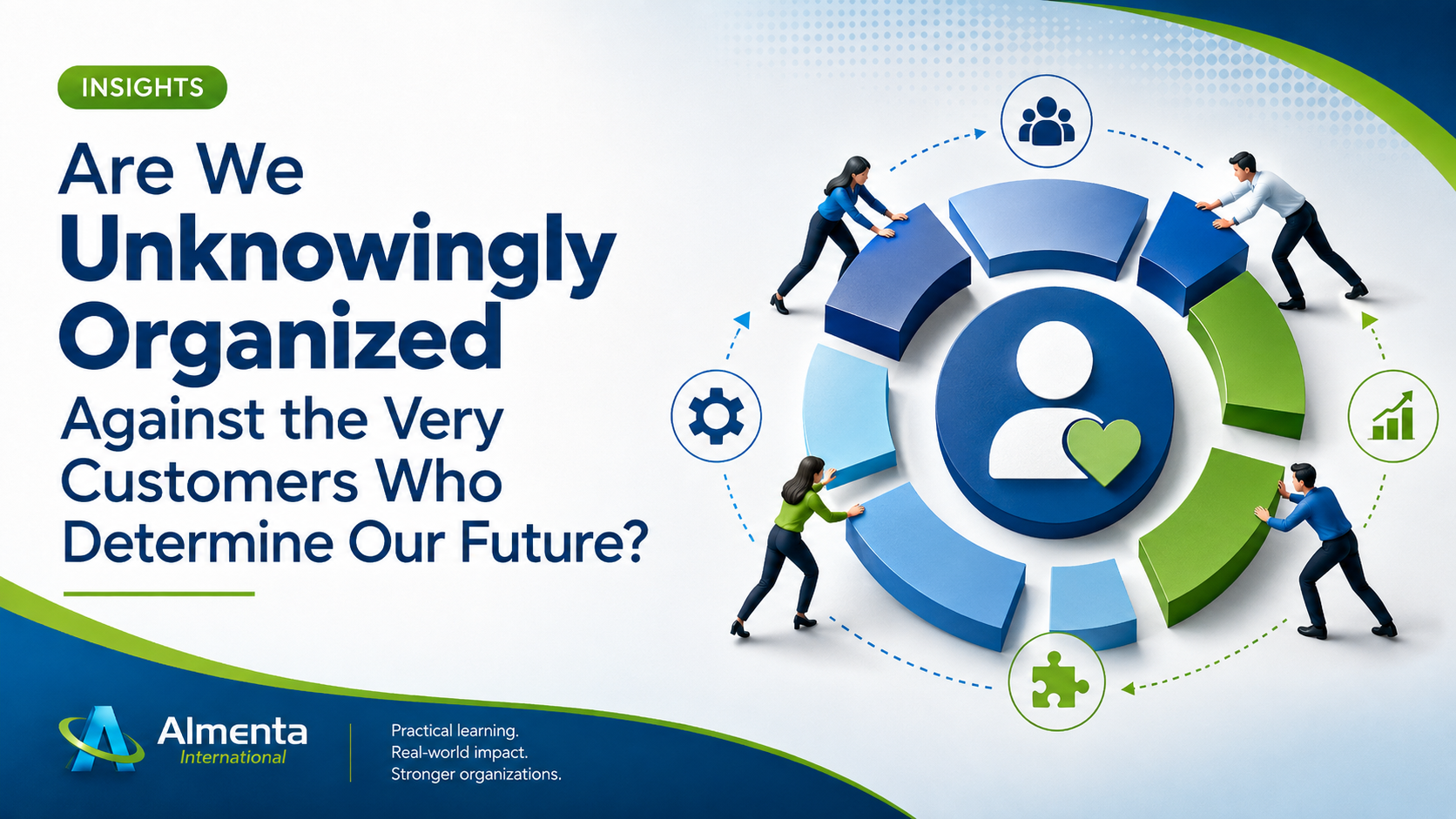
Because an organization can be highly effective internally and still struggle to create meaningful value externally. Processes can be efficient yet frustrating for customers. Teams can be productive yet disconnected from one another. Leadership can be intensely focused on operational performance while gradually becoming removed from the lived reality of customers. Strategy can look compelling in presentations and planning sessions but fail to translate into consistent experiences, decisions, and behaviors throughout the organization.
In many organizations, organizational effectiveness has become largely an internal conversation. The emphasis is often placed on structures, workflows, reporting lines, KPIs, cost management, and execution discipline. Yet customers experience organizations very differently. They experience delays between departments, inconsistent communication, fragmented service, confusing policies, slow responses, and the friction created when internal priorities overshadow customer ease.
Customers do not experience your organizational chart. They experience your organizational effectiveness.
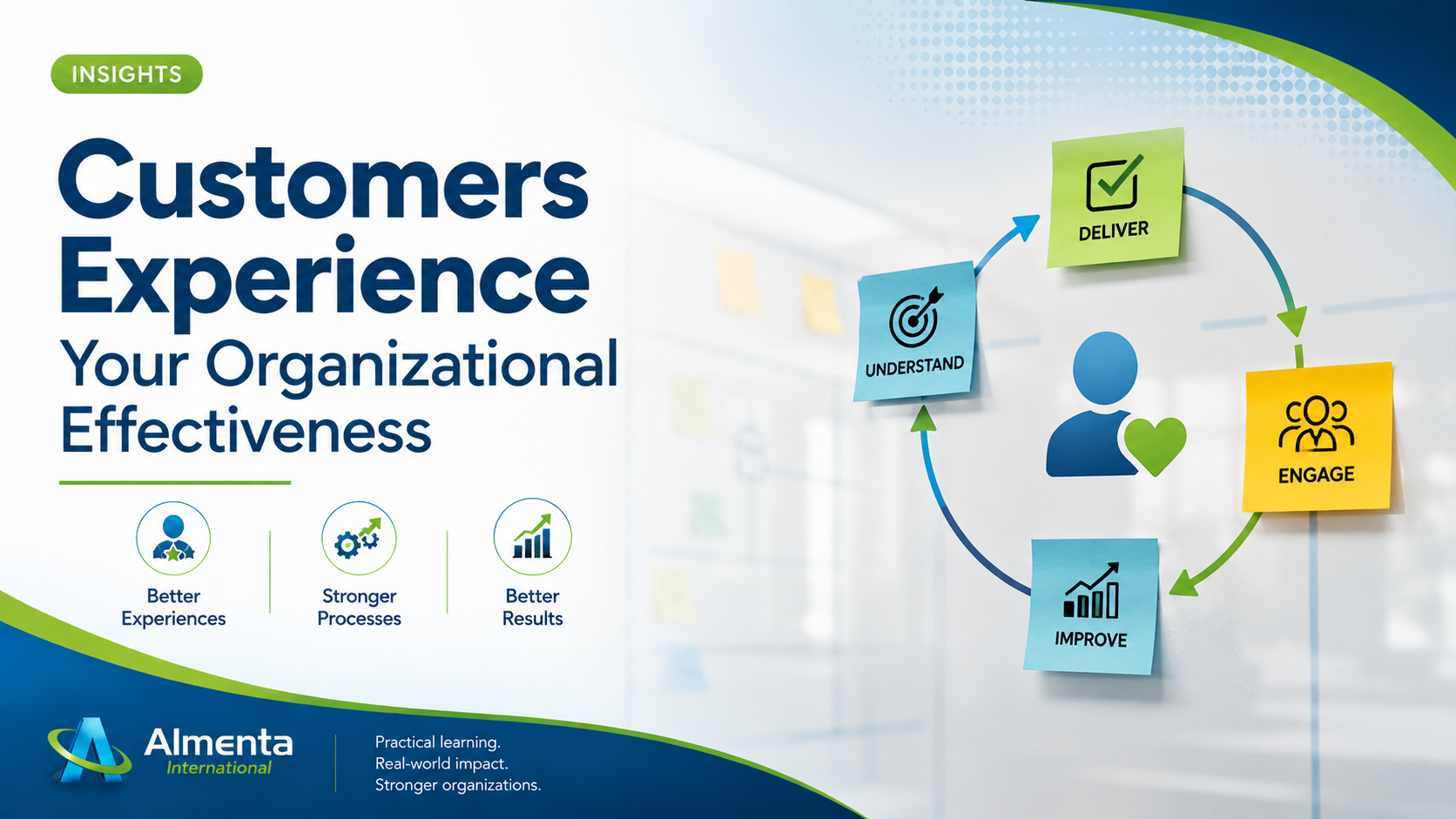
This is where customer centricity changes the conversation. True organizational effectiveness is not simply about how efficiently an organization functions internally. It is about how effectively leadership, strategy, culture, teams, and operations align to create customer value while sustaining business performance.
Leadership plays a central role in this alignment. Not leadership that is focused only on driving results, but leadership that continually asks difficult questions. Where are we unintentionally creating friction? How are our structures helping or hindering customer value? Are our teams aligned around departmental success, or around customer success? Does our strategy live only in strategic plans, or is it visible in how people make decisions, collaborate, communicate, and solve problems every day?
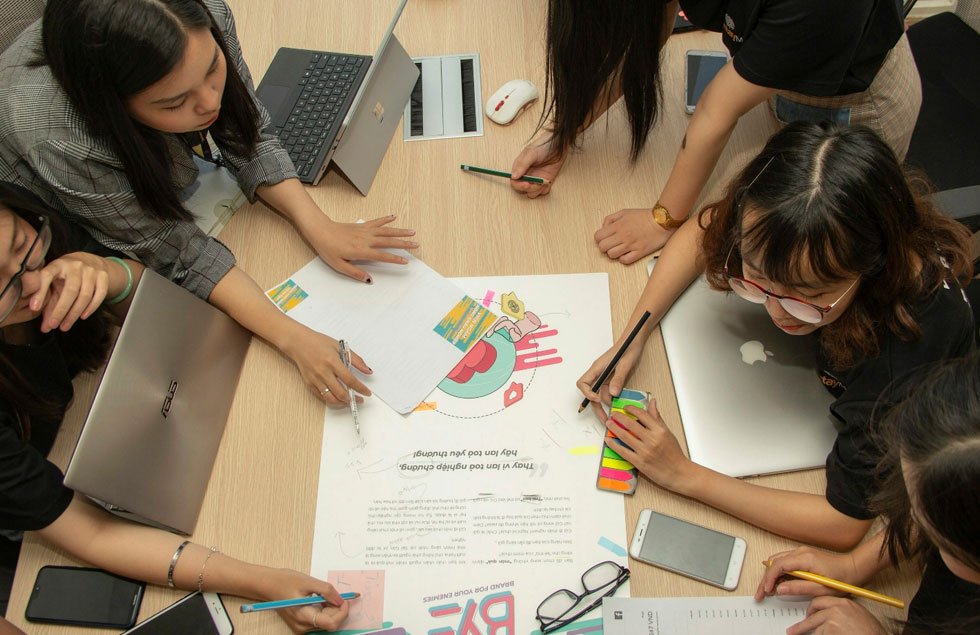
Team development matters just as deeply. Customer experiences are rarely created by a single department. They emerge from interconnected systems of people whose actions, behaviors, communication, and handoffs shape what customers ultimately experience. When teams operate in silos, misunderstand priorities, or fail to understand how their work influences the broader customer journey, organizational effectiveness weakens, regardless of how strong individual departments may appear.
Strategy is equally important, but not strategy as a static document. Effective strategy must be translated into operational reality. It must influence leadership behaviors, team priorities, decision-making, capability development, and the way organizations define and deliver value. Otherwise, strategy remains aspirational rather than transformational.
Perhaps the future of organizational effectiveness is not simply about becoming more internally optimized. Perhaps it is about becoming more intentionally aligned around value creation. Because organizations do not compete only on products, services, or technology. Increasingly, they compete on how effectively they organize themselves around the customer.
And that may be one of the most important measures of organizational effectiveness today.
For more information, contact info@almentainternational.net or visit almentainternational.com.
Designing the Experience Economy: Biophilic Design, Atmospherics & Sensory Marketing
Presented by: Dr. Luana Nanu
Service businesses used to compete on features and price. They now compete on atmosphere. This session examines the three frameworks reshaping experiential service environments — biophilic design, atmospherics, and sensory marketing — and translates four decades of servicescape research into operator-ready strategy. Whether you run a hotel, a restaurant, a retail floor, a clinic, or a spa, the physical environment is doing brand work whether you’ve designed it to or not. Attendees will leave with frameworks they can cite, ROI data they can use to defend design budgets, and case examples they can adapt to their own spaces.
Attendees will walk away with:
- Conceptual frameworks — Kotler’s atmospherics, Bitner’s servicescape, the 14 Patterns of Biophilic Design
- Research-backed ROI data
- Case examples spanning hospitality, retail, and wellness environments
- A practitioner five-sense audit toolkit
This session was held on Friday, June 19, 2026. Registration is closed. Visit the Customer Centricity Circle for upcoming sessions.
What else is happening at Almenta International?
Check out our Professional Development Opportunities:
For more information, contact info@almentainternational.net